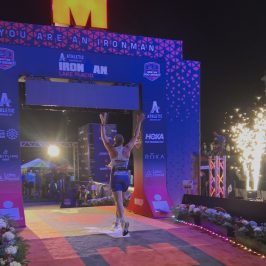
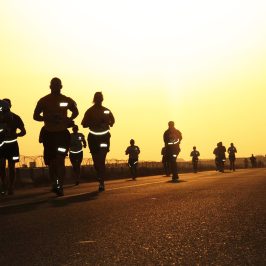
If you’re training for a fall marathon, half marathon, or Ironman, your long runs are likely becoming the cornerstone of your training in the summer months. They build endurance, increase confidence, and prepare your body for the demands of the race.
But as race day gets closer, the purpose of your long runs begin to shift.

Early in a training cycle, the primary goal of the long run is to build aerobic endurance and increase your body’s ability to stay on your feet for longer periods. As your fitness improves, your long runs are more than just adding mileage. In addition to the physiological benefits, they become opportunities to fine-tune the details that can make race day smoother and more successful.
Perhaps after a long run, besides asking yourself how many miles you covered, also ask “What did I learn today?”. Think about what worked or what didn’t work. What would you improve?
Long Runs Are Your Best Opportunity to Practice Race Day Logistics
Race day should never be the first time you try something important. Your key long runs allow you to practice nearly every aspect of your race plan while the stakes are low. Every successful long run should leave you not only fitter, but also more confident in knowing what to expect on race day.
Think about all the decisions you’ll have to make during your race:
- What gear will you wear?
- What pace will you hold?
- When will you eat?
- How much will you drink?
The answers to all of those questions should be made clear through your training, not from guessing on race morning.
Practice Your Race Pace
If your training plan calls for an easy long run, keep it easy. If it calls for race pace intervals, execute them with intention.
Learning what your goal pace feels like without constantly looking at your watch will help you race with greater confidence and will help you successfully carry out your race pace.
Remember, you’re training for race day, not trying to have a good looking Strava profile.
Dial in Your Nutrition and Hydration
Long Runs are the perfect time to practice your race day fueling strategy. Don’t wait until race morning to discover that a particular gel upsets your stomach or that you’re not drinking enough electrolytes.
Use your long runs to answer questions like:
- When should I begin to fuel?
- How much do I need per hour?
- Am I drinking enough?
- Are my electrolytes meeting my needs?
- Is my energy consistent throughout the run?
There isn’t a perfect equation that every athlete can follow when it comes to hydration and fueling. And because every athlete is different, you’ll need to refine what works for you. Every long run gives you another opportunity to refine your nutrition and hydration plan so that there are fewer surprises on race day.
Test Your Gear
On race day, nothing should be new.
Wear the gear you plan to use during your race at a minimum a few times during a long training run so that you know it works for you. Small issues that seem insignificant during a short workout can become major problems after several hours of running.
During your training, test out:
- Shoes
- Socks
- Clothing
- Hydration systems
- Hat
- Sunglasses
- and any other equipment you might need or will carry with you
Pay attention to hot spots, chafing, comfort, and accessibility.
- Can you easily reach your nutrition?
- Does your hydration system stay on comfortably?
- Do your shoes still feel good late in a run?
These details matter more than many athletes may realize. especially in the later miles.
Build Mental Confidence
Every endurance event, whether it’s a half marathon or an Ironman, eventually becomes challenging. Long runs give you the opportunity to practice staying clam and focused when fatigue begins to set in. Instead of concentrating on how many miles remain, focus on the mile you’re in. Focus on the present. You can break the race into smaller segments and remind yourself that discomfort is temporary.
The confidence you build during training often becomes your greatest asset on race day. And working on mental training carries over into racing every distance.
Learn From Every Long Run
One of the simplest ways to improve is to spend a few minutes reflecting after each long run.
Ask yourself:
- Did I execute my pacing plan?
- Did my fueling and hydration work?
- Did my gear perform as expected?
- How did I feel during the final miles?
- What will I do differently next time?
Each long run should teach you something. Sometimes you’ll need to work on pacing, sometimes on fueling, and sometimes on the mental aspect of the sport. Those lessons become invaluable as race day approaches.

As you enter the final weeks before your race, remember that your long runs are more than just building up mileage. Physiologically, they build your endurance and help you become efficient at the distance, but they’re also an opportunity to fine-tune your nutrition, hydration, gear, and the mental side of the sport.
Make each long run intentional so that you arrive at the start line knowing you’ve done more than just logging miles, you’ve done everything you can to prepare for a successful race.
Ready to transform your training? See how we can help.
Share the love! - - >