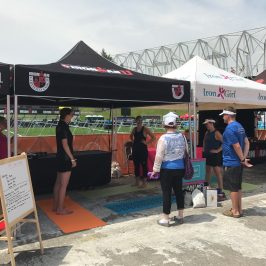
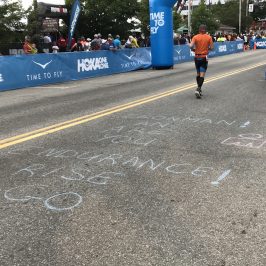
Lake Placid did what Lake Placid always does. It welcomed thousands of athletes and spectators to the greatest Ironman show in America. Main Street was busy, athletes where coming down the finish chute, and somewhere in that crowd was a version of you watching and thinking “I want that”.
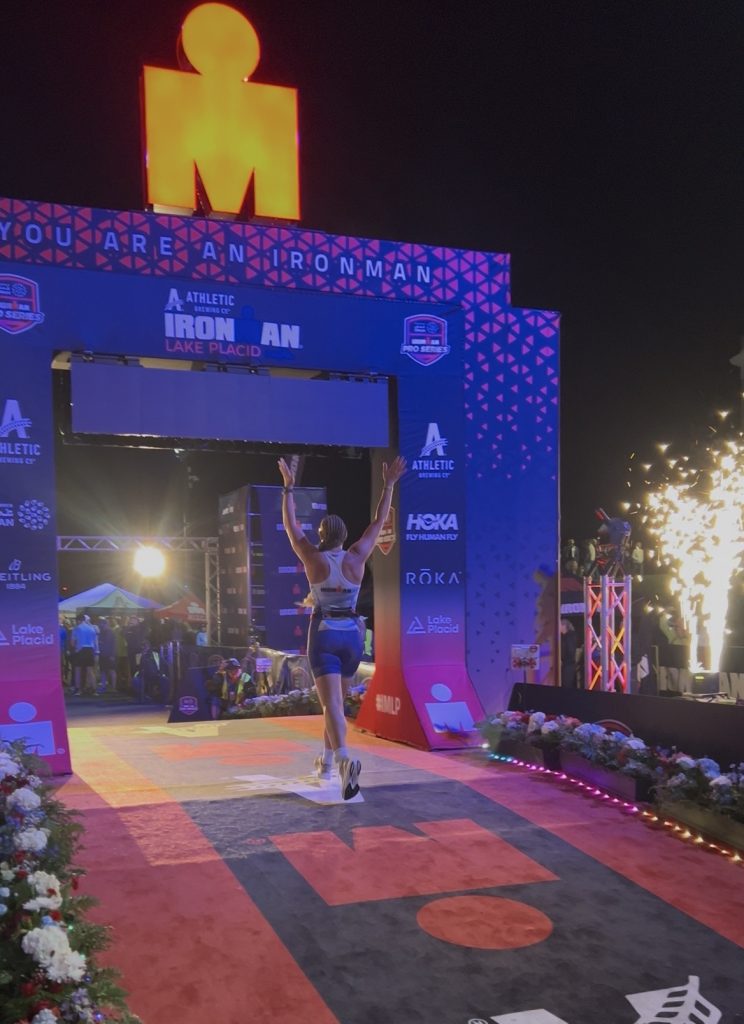
We’ve all felt it at one time or another. There’s nothing quite like watching an Ironman distance finish line in person. And it’s not just the athletes, it’s the crowd, the noise, the way a small town turns itself into Ironman central for the week. It’s completely reasonable to come out of that experience wanting to be on the inside, crossing that finish line.
But here’s the conversation that doesn’t always happen enough: Inspiration and readiness are two different things. Signing up in the emotional high of a spectator weekend is how a lot of athletes get injured, burned out, or standing at the start line unprepared. This is why it’s so important to know what you’re getting into before signing up and knowing how to prepare after you sign up. This is why knowing your Ironman distance readiness is important.
If the Lake Placid Ironman lit something up inside of you, good. That is the starting point. That is the motivation and spirit you want to keep with you throughout your Ironman journey. But let’s now go on to actually answer the question: Are you ready for the Ironman distance? And we’re lookng at being ready in two ways. The first is can you finish if everything goes right? And second, can you build toward it in a way that’s sustainable, safe, and enjoyable?
Inspired is the Easy Part
Almost anyone can feel inspired on a Sunday in July. What separates the athletes who cross the finish line from the the ones who DNF is what happens the other 51 weeks of the year. THe weeks with no crowds cheering, no cowbells, just training.
An Ironman build isn’t a single hard effort, it’s 20 to 30 weeks of layered, progressive training that has to fit around a life that doesn’t pause for you. That’s the piece that gets glossed over in the post-race glow.
The Ironman Readiness Checklist
Here’s what to look at when you’re assessing whether or not you’re ready to take on the full Ironman distance. Not the motivational part, the useful and down to earth gut check.
1. You have a real aerobic base
Having finished a shorter race once doesn’t mean you’re ready to jump up to the full Ironman distance. What matters is consistency. Have you been training aerobically for 12 months or more? Ironman training is not the time to also be building your base from scratch. If you’re starting from zero, that just means the honest timeline is longer than “sign up for the next one”.
2. You know your weekly time availability
A realistic Ironman build could ask for 10-16+ hours a week at the peak of training that includes swimming, cycling, running, and strength. This isn’t a “I’ll find the time” kind of training block. This is actual protected hours on your calendar for weeks or months.
If you job involves regular travel, quarterly crunches, or unpredictable demands, that doesn’t disqualify you. But it does mean the plan has to be built around your real calendar, not an idealized one. It will required dedication and sacrifice on your part and support from your family.
3. Your swim is more than just a hope
Physiologically, the swim is not the hardest, but it is the part that many triathletes have the least experience in. While the swim is the shortest leg of an Ironman, it can be the hardest part of the Ironman and take the most emotional energy to get through. So being comfortable swimming in open water is critical if you want to be able to finish. This takes time and work to get through and something that needs to be coordinated with your training.
4. You have recovery capacity, not just training capacity
Training is the stimulus and adaptation happens during recovery. An honest readiness check includes sleep, stress load, and general life bandwidth. Because a body under chronic work stress with 5 hours of sleep doesn’t absorb a 16 hour training week the same way a well rested one does. This is where we look at the whole athlete, not just the training log.
5. The logistics are sorted
Bike, race entry, travel, time off… These matter, but they’re all solvable problems, not readiness problems.
Having the right bike, covering the race entry fee, arranging travel and time off…these are all real considerations, but they’re the easiest ones to solve. Money and gear can be sorted in a weekend. Aerobic base, swim skill, time capacity, and recovery need more time. If the only box you checked is “I can afford it” or “”I bet I can do that, too”, that’s not the same as being ready. Don’t let it be the reason you sign up before the other four are true.
If You’re Not Ready, That’s Not a No
Here’s the part that should be very clear. Not ready right now doesn’t mean never. It means the responsible next step is a shorter build first and gaining experience in the sport.
If your aerobic base is thin, your swim needs work, or you’re not sure what your calendar can actually accommodate, than an intermediate goal should be the next step. A half marathon, marathon, or half Ironman / 70.3 distance might be the better first move for you. This is not a consolation prize, it’s a legitimate on ramp to the full distance Ironman, It lets us find out how your body and your calendar actually respond to the structured Ironman training. Taking these first steps leads to a strong full distance finish and made the Ironman build smoother, not slower.
What To Do This Week
You don’t need to decide today whether you’re signing up for next year’s race. You need an honest starting point.
- Look over your last 12 months of training and be honest about consistency, not just volume.
- Do some open water swimming (or get in the pool and include sighting) and see where your swim actually stands.
- Look at your calendar for the next 6 months. Review travel, big work cycles, family commitments, etc. and block out what a realistic weekly training window looks like.
- Get a baseline assessment before you commit to a date, not after.
If the Lake Placid Ironman has you thinking about the Ironman distance, we can help you with an honest conversation and help you prepare to reach your goal. Inspiration got you here. Let’s build the plan that gets you to the start line ready and to through the finish line proud.
Ready to Start Your Ironman journey?
See how we can help you.
Share the love! - - >