In Part 1 of our Race Day Tactics series, we covered How to Pace a Race. Now in Part 2, we cover the underestimated art of running tangents.
Race Day Tactics Part 2: Running Tangents
Most athletes think faster racing comes from training harder. Fitness matters, but there’s more to racing than just fitness. Race tactics can help you save time without running faster. And running tangents is one of those tactics.
Here’s something many runners never consider when racing: Are you actually racing the course distance or are you racing something longer?
Race courses are measured by the shortest possible route a runner would take, but most athletes are running longer. Distance adds up quickly when you run wide at every corner, drift to the outside of curves, and follow along with large crowds.
Running tangents is one of the simplest, highest return race tactic available. It costs no additional fitness, no extra effort, and no special gear. It just requires knowing what it is and practicing it before race day.
What is a Tangent?
In geometry, a tangent is a straight line that touches a curve at a single point. In racing, running a tangent means taking the straightest possible path through a curve, bend, or turn on a course. You’re cutting the shortest line from one point to the next rather than following the arc of the road.
If you’re running around a curve and you hug the inside edge the entire way, you’re running an arc. If instead, you drift slightly wider coming in, cut through the apex of the curve, and drift back out on the exit, you’ve run a shorter distance but cover the same ground. Multiply that by every single curve in a race and the savings adds up.
Why Runners Don’t Run Tangents
There are a few reasons runners may not follow this race tactic.
Crowd Dynamics: In a large event, the first several miles often make running tangents nearly impossible. In this situation, line choice is largely out of your control. This is why starting position matters. Seeding yourself appropriately gives you the space you need to run your race.
Remember that it’s important to seed yourself correctly, not just for a faster race time, but for safety and for race enjoyment. Incorrectly seeding yourself in a faster corral is unfair to the other runners because they then have to run around a slower runner which can be both a safety issue and cause them to lose time navigating around you.
Lack of Awareness: Many athletes have never thought about this. They run the shape of the road without question, assuming that the course is measured in the middle of the path as opposed to the shortest path.Once you’re aware of it, you start seeing the line automatically.
Looking At Your Feet Instead of Ahead: Running tangents requires scanning 50 – 100 meters ahead to identify the efficient line. Besides it affecting their running form, athletes who run looking down at the road in front of them can’t plan out the trajectory. Practice losing ahead and reading the course in front of you.
Fatigue: In the back half of a long race, execution degrades. Your brain defaults to autopilot and you stop making active decisions because you’re just trying to make it through. If you’ve run tangents in training, then it becomes automatic and instinctive, rather tan an effort.
The Rules of Running Tangents
Running tangents isn’t about cutting corners illegally or shortcutting the course. It’s about choosing the most efficient path within the course boundries.
According to USA Track & Field’s course measurement procedures, “a race course is defined by the shortest possible route that a runner could take and not be disqualified.” On a certified race course, the official distance is measured along the tangent lines, which is the shortest legal path. That means that the course is only the exact distance if you run perfect tangents throughout the race.
Most runners don’t run tangents for various reasons. They follow the curves of the road, are running in large crowds, hug one side for comfort, or weave through crowds. This adds distance and time to your race.
Here’s how to run tangents:
On a Straight Course:
Stay relatively straight. Don’t drift side to side or weave around other runners unnecessarily. Every unnecessary lateral move adds distance.

On Gradual Curves:
Look ahead to where the road bends and aim for the apex, or highest point in the curve. Cut towards it in a straight line rather than tracking the arc of the road.
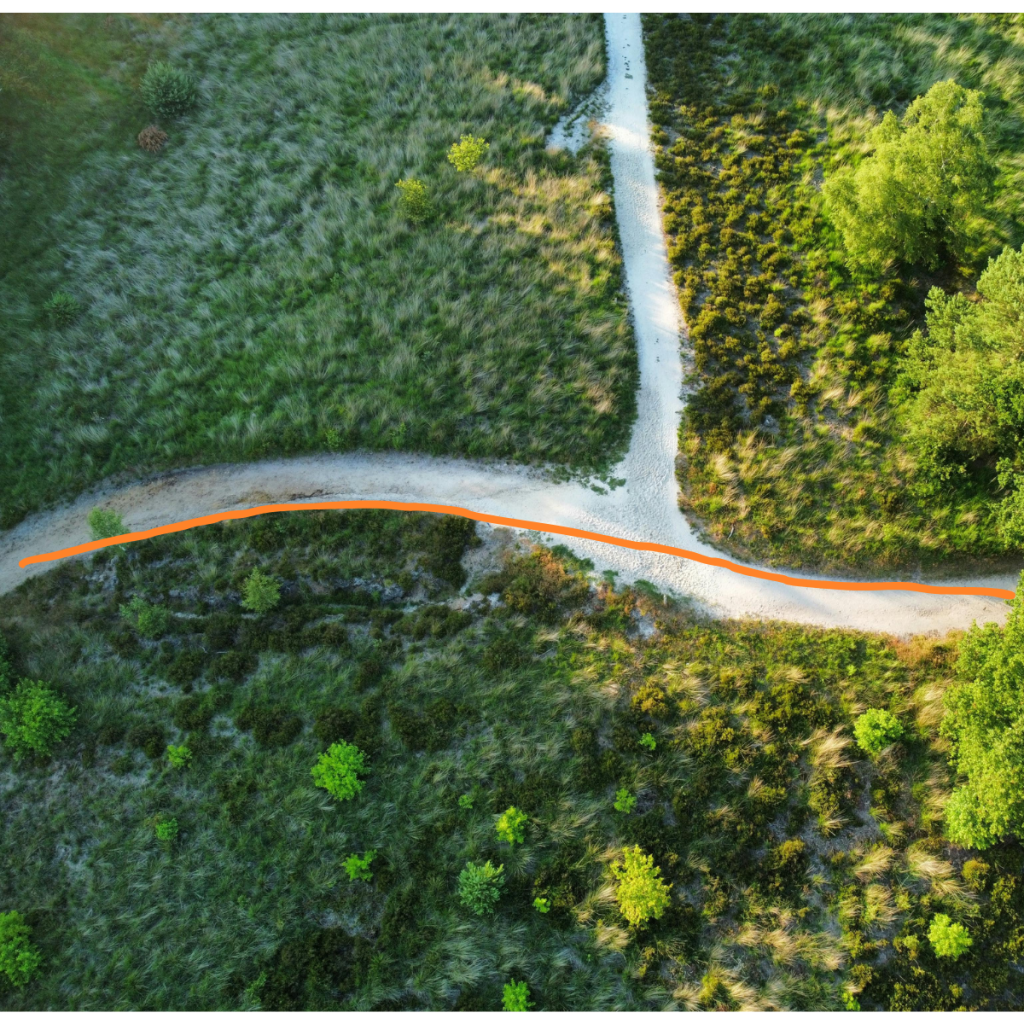
On Sharp Turns:
Come in slightly wide, hit the inside of the apex, and exit wide.
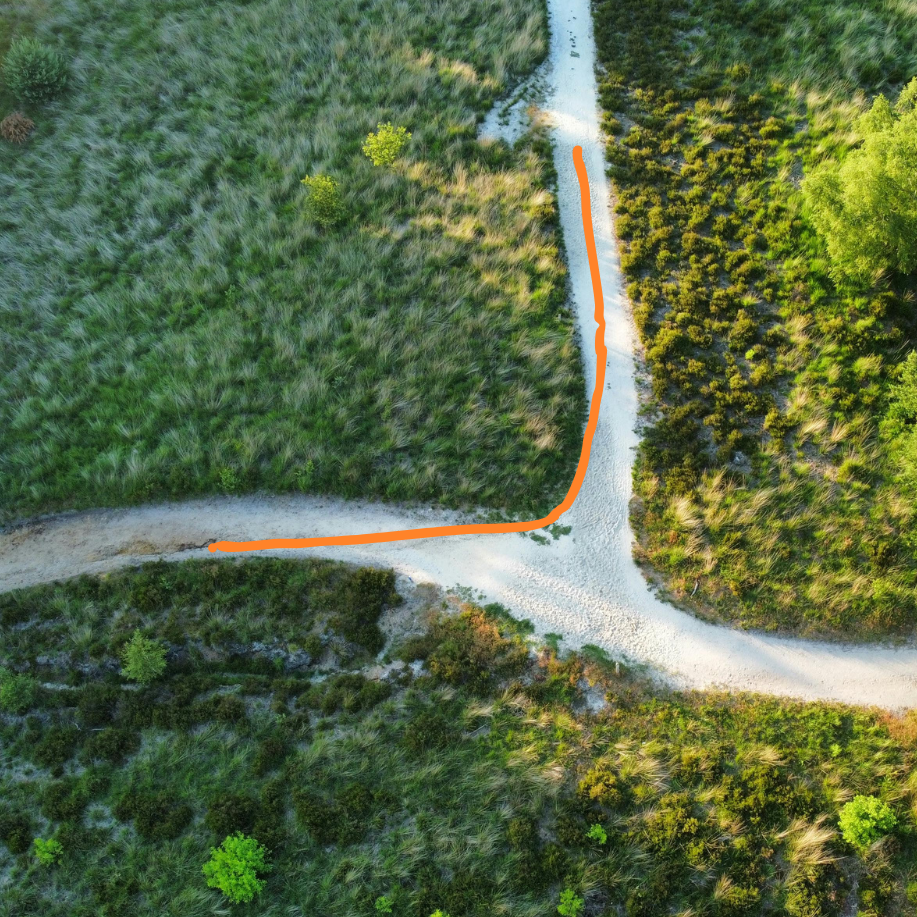
From Curve to Curve:
When 2 curves are close together, or on a curvy section of road, you may be able to run a single straight line between their respective apexes. Look ahead and connect the dots. Aim for the second curve as you run.
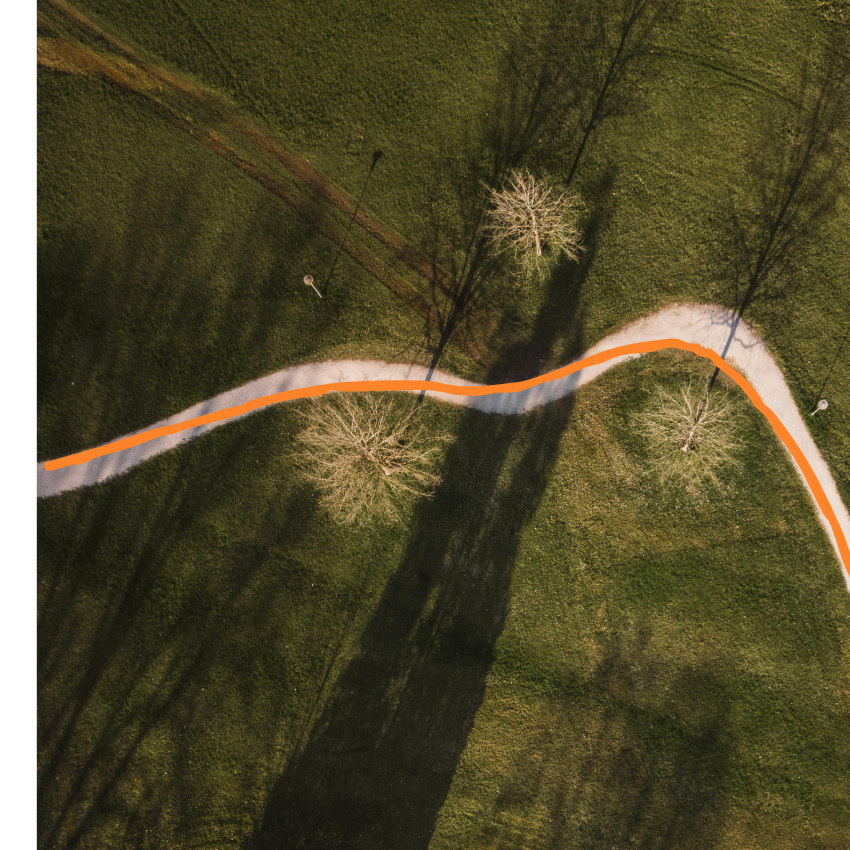
How to Practice Running Tangents Before Race Day
The best time to build this skill sin training, not on race day.
On your regular routes, start pacing attention to how you navigate curves. When you approach a bend in the road or path, consciously identify the tangent line and run it. At first it will feel deliberate, maybe even slightly awkward. But soon, it will become natural.
Run parts of every run on on roads or paths with multiple curves and turns specifically to work on this race tactic. A local park loop or winding road is perfect for this. Focus on looking ahead, identifying the line, and committing to it without second guessing mid-curve.
If you’re racing a course that you’ve previewed either in person or on a course map, study the turns. Identify the places where the tangents will matter most: the sharpest curves, the sections where the road winds back and forth, and the hairpin turns. Mentally run through those tangents as you prepare for the race.
Race Day Execution
Go into your race with a simple mental framework of always looking ahead for the next tangent. Think to yourself: Between now and the next turn or curve, am I running the straightest possible line?
When you have space, be deliberate and take the straight lines. In crowded sections, do your best and don’t waste energy stressing about imperfect lines. As the crowd thins out, you’ll have more freedom to choose your line.
Tangents are just one piece of a larger race tactics framework. They won’t transform a poorly prepared athlete into a podium finisher, but for a well trained athlete trying to PR, removing unnecessary distance is a meaningful edge.
What’s Next
Racing well is more than just speed. Finesse navigating an aid station can have you sailing past your competition.
In Part 3, we’ll discuss the nuances of aid stations and how navigate them.
Join Club Rise Endurance for member-only content and more race day tactics.
Share the love! - - >